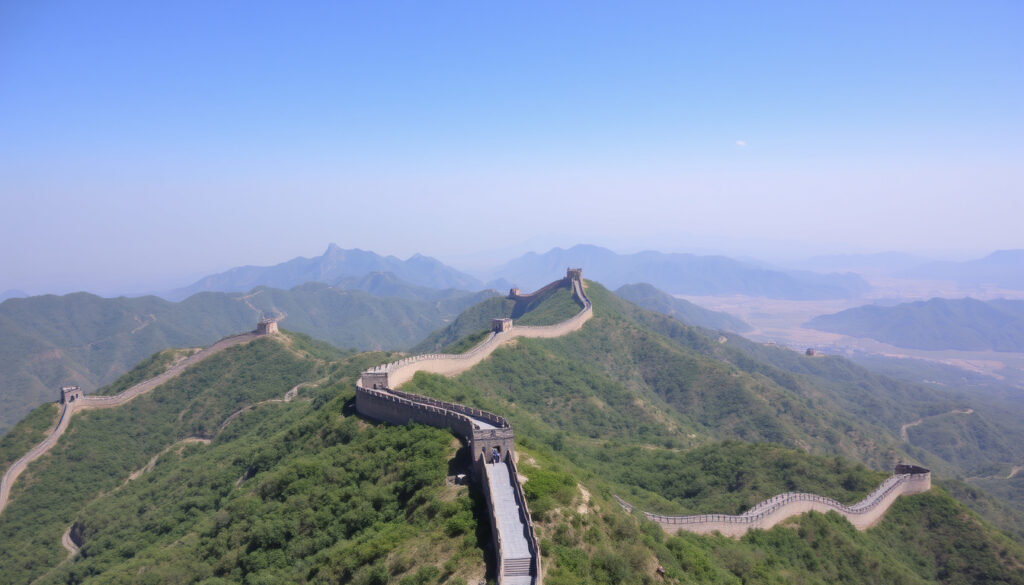
Great Wall of China: Length, History, Facts & Myths
Standing on the Great Wall triggers a particular kind of awe — that mix of physical exertion, sheer scale, and the realization that you’re walking where millions of feet have traced for centuries. Yet the popular image misses the mark: the Wall isn’t a single continuous line, its official length kept changing for years, and even the most basic questions (how long is it, really?) took an official survey to answer. The 2012 National Cultural Heritage Administration study put the total route at 21,196.18 km — a figure that rewrote textbooks.
Length: 21,196 km total route · UNESCO Status: World Heritage Site (1987) · Age: 3rd century BC to 17th century AD · Section Type: Ming Dynasty best preserved
Quick snapshot
- 21,196 km total route per 2012 survey (Wikipedia)
- Ming Dynasty section: 8,850 km (Britannica)
- UNESCO inscribed in 1987 (SUNY Cortland)
- Exact worker death toll unverified (Study.com)
- Total builder count disputed (China Xian Tour)
- Precise historical cost figures (China Xian Tour)
- Spring and Autumn Period (770–476 BCE): first walls built (World History Encyclopedia)
- 221 BCE: Qin unification under Emperor Shi Huangdi (World History Encyclopedia)
- 304 CE: Xiongnu breach of wall (World History Encyclopedia)
- Ongoing preservation debates (SUNY Cortland)
- Visitor management challenges at popular sections (Global Adventure Challenges)
- Continued archaeological discoveries (China Xian Tour)
The comprehensive survey documented thousands of individual structures across the wall system.
| Measure | Value | Source |
|---|---|---|
| Official Length | 21,196 km (2012 survey) | Wikipedia |
| Height Average | 6-7 meters | SUNY Cortland |
| Width at Base | up to 9 meters | SUNY Cortland |
| Labor Estimate | millions over centuries | Study.com |
| UNESCO Year | 1987 | SUNY Cortland |
How long is China’s Great Wall and why was it built?
Total length measurements
The Great Wall’s length depends on what you count. The 2012 National Cultural Heritage Administration survey identified 10,051 wall sections, 1,764 ramparts or trenches, 29,510 buildings, and 2,211 fortifications across the full route — totaling 21,196.18 km when including overlaps, branches, and rebuilt sections. This figure dwarfed earlier estimates, which had typically cited around 6,700 km for the “traditional” route without branches. Britannica notes the Ming section alone runs 8,850 km, comprising 6,259 km of actual walls, 359 km of trenches, and 2,232 km of natural barriers.
Historical purpose and construction phases
The Wall was built primarily for military defense against northern invaders, particularly the nomadic Xiongnu tribes. Britannica traces the earliest walls to the Spring and Autumn Period (770–476 BCE), when rival states like Qi, Yan, Wei, Zhao, Qin, and Chu constructed independent fortifications along their borders. Emperor Qin Shi Huang unified these into a continuous structure around 221 BCE, with major construction in 213 BCE reportedly involving 300,000 workers under General Meng Tian. The Xiongnu, however, still breached the wall in 304 CE, as documented by the World History Encyclopedia — a reminder that even this massive structure couldn’t guarantee security. China Highlights notes the wall protected China from northern invasions throughout most of its history, except during the Yuan (1279–1368) and Qing (1644–1912) dynasties — precisely when those dynasties were ruling.
What are 5 facts about the Great Wall of China?
UNESCO recognition
UNESCO designated the Great Wall a World Heritage Site in 1987, calling it “the world’s largest military structure” by the Ming era. The organization recognizes it as one of humanity’s most ambitious building projects — a designation it shared when voted one of the New 7 Wonders of the World in 2007. Less encouragingly, SUNY Cortland reports that less than 30% of the Great Wall remains in good condition today, suffering from natural erosion, development encroachment, and in some cases deliberate removal of bricks by visitors.
Building materials and labor
Construction methods varied by era and location. Rammed earth layers packed between wooden frames formed many earlier sections, while later Ming construction used stone blocks and fired bricks for durability. According to SUNY Cortland, average dimensions were around 10 meters in height and 5 meters in base width — substantial enough to serve as a military road along the top. The human cost was staggering: soldiers, prisoners, and commoners labored under harsh conditions across centuries, with Qin Dynasty construction alone reportedly involving hundreds of thousands of workers.
Sections open to tourists
Several sections welcome visitors, with dramatically different experiences. Badaling, closest to Beijing, draws the largest crowds and features extensively restored stonework — Global Adventure Challenges notes the wall attracts over 10 million visitors annually across all sections. Mutianyu offers a more preserved feel with fewer visitors, while Simatai operates night tours. The Jiankou wild section, by contrast, remains unrestored and challenging — appealing to hikers seeking an authentic, rugged experience. Each popular section has specific access points, hours, and suitability warnings that visitors should verify before planning.
Why did China put up the Great Wall?
Evolution across dynasties
The Wall wasn’t a single project but a centuries-long accumulation. Britannica identifies the Spring and Autumn Period (770–476 BCE) as when border states began building defensive walls, initially as localized fortifications rather than a unified barrier. The Qin unification in 221 BCE connected these existing walls under imperial direction, creating something closer to the modern concept. Han Dynasty emperors extended the structure westward, reportedly reaching lengths of about 20,000 km over 120 years. The Liao and Jin dynasties, ruled by non-Han groups, built their own walls — sometimes parallel to or overlapping with Han-era structures. The Ming Dynasty (1368–1644) ultimately built the most extensively preserved sections visible today, with fortified passes like Jiayu Pass (built 1372) and Shanhai Pass (built 1381) serving as strategically critical endpoints.
Military and symbolic roles
Strategically, the Wall served multiple functions. It provided a visible barrier against cavalry incursions, allowed early warning via watchtowers, and facilitated troop movements along its parapets. China Xian Tour notes Jiayu Pass was specifically designed as the westernmost Ming fortification, while Shanhai Pass controlled the critical eastern approach. Beyond purely military purposes, the Wall also functioned symbolically — marking the boundary of “civilization” and serving as a propaganda monument to imperial power. Britannica emphasizes that historians typically consider the defensive walls built during the Spring and Autumn period, putting the wall at almost 3,000 years old in various forms.
Can you walk the entire Great Wall of China?
Feasibility and records
Walking the entire Great Wall is largely theoretical. The 2012 survey identified over 6,000 km of unrestored, eroded, or destroyed sections — stretches that would require serious mountaineering skills, rural navigation, and in some cases, explicit permission from local authorities. No complete solo traverse has been independently verified to date. What exists are regional walks: popular multi-day hikes along restored Ming sections, particularly between Jinshanling and Simatai, where well-maintained paths offer 5-10 km daily segments. The practical barrier isn’t physical capability but legal access and continuous route connectivity.
Popular sections for hiking
Hikers typically choose from a few well-established routes. The Jinshanling-to-Simatai stretch offers about 10 km of scenic Ming Dynasty wall with watchtower variety; many guide services run overnight trips here. Gubeikou to Jinshanling provides another popular segment, roughly 15-20 km depending on route variations. For day hikers, Mutianyu offers accessible restoration with chairlift support, while the wild section at Jiankou suits experienced trekkers seeking a more rugged experience. Most hikers underestimate the terrain’s vertical challenge — several steep sections test knees and cardiovascular fitness alike.
Visitor management has become critical: popular sections like Badaling see crushing crowds that damage fabric and erode visitor experience. The paradox is that the wall most people “see” is the most crowded — while vast stretches remain virtually unknown and deteriorating.
How long did it take to build the Great Wall of China?
Timeline overview
Construction spanned roughly 2,000 years in overlapping phases. Britannica identifies the earliest walls as Spring and Autumn Period constructions (770–476 BCE), with the Qin unification around 221 BCE representing the first imperial connection of existing fortifications. The most intensive single phase was Qin construction in 213 BCE, reportedly mobilizing 300,000 workers. Han Dynasty expansion followed, reaching about 20,000 km over approximately 120 years. Jin Dynasty fortifications (1115–1234) added another 4,010 km in border barriers. The Ming Dynasty (1368–1644) represents the longest sustained construction period, with renovations reportedly occurring 18-20 times — meaning the wall was continuously rebuilt, reinforced, and extended throughout that 276-year span.
Major construction eras
Four dynasties dominate the historical record. Qin Shi Huang’s unification (221 BCE) connected earlier walls into a coherent structure, though much of this original work was earthwork rather than stone. The Han Dynasty extended protection westward into Central Asia, creating a network rather than a single continuous line. The Ming Dynasty built the stone walls most visitors see today — substantial, durable, and engineered for 8,850 km across northern China’s varied terrain. China Xian Tour provides specific construction dates for key passes: Jiayu Pass (1372) as the westernmost Ming section, Shanhai Pass (1381) as the eastern terminus, and Yanmen Pass (1374) as a major gateway.
Confirmed facts
- Total route: 21,196.18 km per 2012 survey
- Ming section: 8,850 km
- Qin unification: 221 BCE
- Spring and Autumn origins: 770–476 BCE
- UNESCO inscribed: 1987
- Wall stretched from Liaodong to Lop Lake
- Ming Dynasty built most preserved sections
What’s unclear
- Exact worker death tolls unverified
- Total builder count disputed across sources
- Precise historical cost beyond modern equivalents
- Archaeological findings from pre-Qin walls incomplete
What experts say
The most extensive and best-preserved version of the wall dates from the Ming dynasty (1368–1644) and runs for some 5,500 miles (8,850 km).
— Britannica Editors (Encyclopedists)
It was further concluded that the Ming Great Wall measures 8,850 km (5,500 mi).
— National Cultural Heritage Administration (Chinese Government Survey)
The “visible from space” claim is a persistent myth — astronauts have repeatedly stated that the wall is not visible to the naked eye from orbital altitude. This misconception likely stems from a 19th-century letter writer making claims about Chinese walls, never verified scientifically.
The Great Wall represents one of history’s most ambitious construction projects — not a single monument but a 2,000-year accumulation of defensive works spanning thousands of kilometers across China’s northern frontier. For travelers planning a visit, the choice of section matters enormously: Badaling offers accessibility but crowds; Mutianyu balances restoration with experience; wild sections reward adventure but demand fitness and preparation. The Wall’s preservation challenges are real, with less than a third in good condition, yet UNESCO status and ongoing conservation work offer hope that this remarkable structure will endure for future generations.
Related reading: construction timeline · historical milestones
Surveys confirm the Great Wall spans 21,196 km, while its visiting guide overview details hiking trails amid debunked myths.
Frequently asked questions
Which is older, Jesus or the Great Wall of China?
The Great Wall is far older. Construction began during the Spring and Autumn Period (770–476 BCE), centuries before Jesus was born around 4 BCE. The Qin unification that created the first imperial wall structure occurred around 221 BCE — nearly two centuries before Jesus’s lifetime.
Why is the Great Wall so special?
The Great Wall is special for several reasons: its sheer scale (over 21,000 km when all sections are counted), its construction duration spanning 2,000 years, its role in protecting Chinese civilization from northern invasions, and its designation as the world’s largest military structure by UNESCO. It represents an extraordinary feat of ancient engineering and labor mobilization.
Has anyone walked the entire Great Wall?
No verified complete solo traverse of the entire Great Wall exists. Several expedition teams have attempted partial walks, and documented attempts have covered hundreds of kilometers, but continuous travel along the full route faces major obstacles: destroyed sections, private land, military zones, and geographic hazards in remote areas.
Where is the Great Wall of China located?
The Great Wall spans northern China from Liaodong in the east (near the Bohai Sea) to Lop Lake in the west (Gansu Province), roughly following the historical northern border. Key sections near Beijing include Badaling, Mutianyu, Jinshanling, and Simatai. The wall passes through or touches nine provinces, regions, and municipalities.
Can you see the Great Wall from space?
No. The widely repeated claim that the Great Wall is visible from space is a myth. Multiple astronauts have confirmed that the wall is not visible to the naked eye from orbital altitude, even from the International Space Station. The wall’s width (typically 3-5 meters) and materials blend into the natural landscape from that distance.
What materials were used in the Great Wall?
Construction materials varied by era and location. Earlier walls used rammed earth (compacted soil layers), while later Ming construction used fired bricks and stone blocks for durability. Some sections incorporated wood, particularly watchtower frameworks, and natural materials like gravel for drainage. The Ming walls visible today typically feature stone foundations with brick facings.
How many people visit the Great Wall yearly?
The Great Wall attracts over 10 million visitors annually across all open sections, according to available visitor data. Badaling alone receives millions each year, particularly during peak seasons and Chinese holidays, making it one of the country’s most visited tourist attractions.
More related posts
 Maison a Vendre St-Bruno: Complete Guide for Home Buyers
 Jerry Springer Biography: Death, Show, Daughter, Net Worth
 Us Visa Integrity Fee – Amount, Affected Visas, Start Date
 Israel News Today Live – Gaza Strikes and Lebanon Talks
 Alimentation Couche-Tard – History Brands Growth Facts
 Mount Baker Guide: Volcano, Skiing, and Nearby Towns
 The Night Before Christmas – Full Poem, History and Authorship Debate
 Sirloin Tip Roast Recipe: Oven & Slow Cooker Methods